Samsung Galaxy S25 is the standard-tier model in the newly launched Galaxy S-series, sitting beneath the Galaxy S25 Plus and the top-of-the-range Galaxy S25 Ultra. The Galaxy S25 brings several new features to the table, including personalized AI features and a powerful processor. It retains its compact design with a 6.2-inch LTPO OLED display, a 50MP triple-camera setup, and a 4000 mAh battery supporting 25W wired and 15W wireless charging. Running on One UI 7, it combines performance efficiency with an intuitive user interface.
Samsung Galaxy S25 Key Specs and Features
- 6.2 inches Dynamic LTPO AMOLED 2X Display, 1080 x 2340 pixels (~416 ppi density), 120 Hz Refresh Rate
- Always-on Display
- Android 15, up to 7 major Android upgrades, One UI 7
- Galaxy AI
- Circle to Search
- Samsung DeX
- Samsung DeX Wireless
- Qualcomm SM8750-AB Snapdragon 8 Elite (3 nm) Octa Core Processor
- 12GB RAM
- 50 MP (wide) + 10 MP (telephoto) + 12 MP (ultrawide) Triple Rear Camera
- 12 MP Front Camera
- Fingerprint Sensor (under display, ultrasonic)
- 128GB, 256GB, 512GB Built-in Storage
- Dust and Water Resistance (IP68)
- eSIM Support
- 4G LTE Support
- 5G Support
- Tri-band Wi-Fi Support
- 25W Fast Charging Capacity
- 15W Fast Wireless Charging Capacity
- 4000 mAh Li-ion Battery
Design
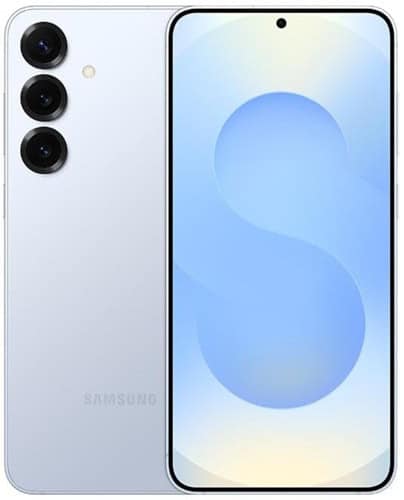
The Samsung Galaxy S25 features a design that combines style, durability, and functionality, making it stand out in the smartphone market. It shares a similar design language with the previous Galaxy S24 but refines it with some subtle changes, especially in the edges, which are now more rounded for a smoother and more comfortable feel in the hand.
The compact size (146.9 x 70.5 x 7.2 mm) and weight (162g) make it easy to hold and use with one hand, offering a balance between size and portability.
The device has slim bezels surrounding the 6.2-inch screen, creating a clean and immersive display experience. The front camera is housed in a small center punch-hole, allowing the screen to remain uninterrupted and offering a more modern look.
Samsung has chosen premium materials to ensure the Android phone remains durable despite its slim and lightweight design. The frame of the Galaxy S25 is made from Armor Aluminum, which is both lightweight and sturdy. This material helps the phone withstand drops or bumps without adding unnecessary weight, so you get strength without the bulk.
The phone’s front and back panels are made of Gorilla Glass Victus 2, a highly durable glass known for its scratch resistance. It’s tough enough to survive accidental drops and helps protect the screen and back from everyday wear and tear, keeping the phone looking new even with regular use.
On the back of the Samsung Galaxy S25, the design is sleek and simple with a matte finish. This finish not only gives the Samsung phone a modern and stylish look but also helps reduce fingerprint smudges, keeping it looking clean and neat.
The triple-camera setup on the back is neatly arranged vertically with black accents, giving it a professional and minimalistic appearance. The camera array is similar to what we’ve seen on the Z Fold 6, and it includes an LED flash and the Samsung logo at the bottom.
– Advertisement –
One of the standout features of the Galaxy S25 is its IP68 water and dust resistance, which means the phone can handle being submerged in water for a limited time and is protected from dust, making it ideal for use in various environments without worrying about damage from elements like rain or dust.
In terms of color options, the Samsung Galaxy S25 comes in several attractive choices, including Icy Blue, Mint, Navy, Silver Shadow, Pink Gold, Coral Red, and Blue Black, giving you a wide range of personalizations to suit your style. This variety ensures that users can pick a color that matches their preferences, whether they like bold, vibrant hues or more subtle, neutral tones.
Display
The Samsung Galaxy S25’s display is nothing short of stunning, offering an exceptional viewing experience that truly stands out in the smartphone world. The 6.2-inch Dynamic LTPO AMOLED 2X panel is a masterclass in display technology, delivering vibrant, crisp visuals with incredible detail.
– Advertisement –
The resolution of 1080 x 2340 pixels offers a sharp 416 pixels per inch (PPI) density, making every image, text, and video appear crisp and clear. Whether you’re browsing the web, watching high-definition content, or simply reading through your messages, the clarity is impressive, and text appears sharp without any noticeable pixelation.
One of the most striking features of the Galaxy S25’s display is its Dynamic LTPO AMOLED 2X technology, which provides exceptional color accuracy and contrast. Colors pop with vivid intensity, and blacks are incredibly deep, thanks to the AMOLED’s ability to turn off individual pixels for true black levels.
The screen’s dynamic refresh rate of 120Hz makes everything feel incredibly smooth, whether you’re scrolling through social media feeds, playing games, or navigating the interface.
The fluidity of the 120Hz refresh rate enhances user interactions and makes the gaming phone feel responsive, making for a seamless and enjoyable experience. For users who prefer to save battery life, the display’s refresh rate adjusts dynamically based on what you’re doing, switching between 1Hz and 120Hz as needed. This means you get smooth performance when you need it but save energy when you don’t.
In terms of brightness, the Samsung Galaxy S25 impresses with a peak brightness of 2600 nits, making it one of the brightest displays in the market. Even under direct sunlight, the screen remains highly readable, with no trouble seeing content clearly even in bright outdoor environments.
This level of brightness is especially beneficial when you’re viewing HDR content, and the HDR10+ support ensures that high-definition videos and images look vibrant and lifelike, with a more natural transition between light and dark areas.
The screen is protected by Corning Gorilla Glass Victus 2, offering robust protection against scratches, drops, and everyday wear. The glass also enhances the display’s overall durability, so you won’t have to worry too much about minor mishaps. Furthermore, this phone has an under-display fingerprint scanner.
One additional feature that’s become a standout for me is the Always-On Display. This feature keeps you informed without needing to unlock the phone. Whether it’s showing the time, notifications, or other useful information, the Always-On Display is bright and easy to read, even when the phone is idle. It’s a thoughtful addition, offering convenience without significantly draining the battery.
Camera
The Samsung Galaxy S25 continues Samsung’s strong tradition of delivering solid camera performance, even though its sensor setup remains largely the same as previous models.
It features a 50 MP primary camera, a 12 MP ultra-wide camera, and a 10 MP telephoto camera. The 50 MP wide sensor, with an f/1.8 aperture, captures sharp, detailed images with accurate colors and impressive dynamic range, thanks to its large sensor size of 1/1.56 inches.
The sensor’s dual-pixel PDAF ensures quick and accurate focusing, and the optical image stabilization (OIS) helps reduce blur, especially in low-light conditions.
The performance in low-light conditions is noticeably improved compared to previous generations, thanks to the Snapdragon 8 Elite chip, which reduces noise and handles dimly lit scenes better. However, while the camera performed decently in low light, it might give a slight amber tone to photos, particularly when shooting at night or under artificial light, which is something hardly seen on other flagship models like the iPhone 16.
The 12 MP ultra-wide camera offers a 120-degree field of view, allowing you to capture expansive landscapes or large group photos. This sensor, while great in good lighting, can struggle in low light, with some images appearing softer or more noisy.
The ultra-wide camera also supports Super Steady video, helping to stabilize footage when moving, but the performance in low light isn’t as good as the primary camera.
Additionally, the Samsung Galaxy S25 comes with a 10 MP telephoto camera with 3x optical zoom, which is great for capturing distant subjects with detail and maintaining clarity. It’s particularly useful for portrait shots, as it offers a natural depth of field.
The PDAF and OIS help with focusing and reducing shake, ensuring better zoomed-in shots. While the optical zoom is impressive, digital zoom at 10x can lead to some soft images, though it has improved compared to previous models, delivering more usable photos.
The 10x digital zoom feature stood out, as it produced more usable images than previous Galaxy models. Despite the limitations of digital zoom, the S25’s computational photography has clearly improved, offering clearer shots even at higher zoom levels.
For those who prefer manual controls, Samsung’s Expert RAW app is a notable addition, providing more advanced features like virtual aperture. This new option is an advanced version of Portrait mode, allowing for bokeh effects without needing a person or subject.
The front-facing 12 MP camera offers detailed selfies with natural skin tones. It supports dual-pixel PDAF for quick focus, making it great for capturing clear, sharp images.
The front camera also supports HDR and HDR10+, which preserves highlights and shadows for well-balanced selfies. For video, it can shoot in 4K at 30/60fps, making it a solid option for vlogs or high-quality video calls.
For video enthusiasts, the S25 takes a significant step forward with the HDR video capture by default. With 10-bit HDR recording and the new Galaxy Log mode, you can capture videos with greater dynamic range, making them perfect for those looking to apply color grading in post-production.
The 10-bit color means you get more flexibility when editing, allowing for more precise and professional-looking results. However, this feature will likely appeal more to seasoned videographers or those with the right editing software. It’s a nice addition for those who want to dive deeper into post-production, but it’s not necessarily something the average user will frequently use.
The Audio Eraser feature is also worth mentioning. Designed to reduce environmental noises like wind, traffic, and water during video recording, this AI-powered feature is Samsung’s attempt to catch up with Apple and Google.
Hardware
The Samsung Galaxy S25 is powered by the Snapdragon 8 Elite for Galaxy, a custom-tailored chipset that marks a significant leap in performance and efficiency.
Built on TSMC’s second-generation 3nm process, this chipset provides a 30% faster GPU and 40% faster NPU compared to its predecessor, ensuring that the Galaxy S25 handles both demanding tasks and casual use with ease.
The Octa-core CPU, consisting of two 4.47 GHz Oryon V2 Phoenix L cores and six 3.53 GHz Oryon V2 Phoenix M cores, delivers exceptional processing power, making everything from gaming to multitasking feel fluid and responsive.
The Adreno 830 GPU improves graphics performance, offering smooth gaming and enhanced visual experiences, while the Qualcomm Hexagon NPU boosts the AI capabilities of the phone, allowing for advanced features like better camera processing, smarter facial recognition, and improved power management.
The Samsung Galaxy S25 offers generous storage and memory configurations, with 12GB of RAM and 128GB, 256GB, or 512GB of internal storage, all backed by UFS 4.0 for faster read and write speeds. However, it lacks a microSD card slot, so users will need to rely on internal storage.
For security, the S25 comes with a Personal Data Engine and a dedicated hardware partition managed by Samsung Knox security. This ensures that personal data is secure, even in case of a compromise. Samsung Smart Switch makes transferring data seamless, though it’s important to note that losing the phone could result in the loss of data stored in this partition.
The Galaxy S25 continues Samsung’s tradition of offering impressive battery life, featuring a 4,000mAh Li-ion battery. Despite the powerful internals, the phone offers a 28-hour video playback time, which is nearly four hours more than its predecessor, the Galaxy S24. This improvement is partly due to the optimizations brought by the Snapdragon 8 Elite.
In terms of charging, the Galaxy S25 supports 25W wired charging (PD3.0), providing 50% charge in 30 minutes. It also supports 15W wireless charging via Qi2.1 and 4.5W reverse wireless charging, allowing you to charge other devices wirelessly. The USB Type-C 3.2 port supports DisplayPort 1.2, enabling video output to compatible monitors or displays.
With 5G capabilities powered by the Snapdragon® X80 5G Modem-RF System and Qualcomm® FastConnect™ 7800 Mobile Connectivity System, the Galaxy S25 ensures ultra-fast cellular and Wi-Fi 7 speeds, making it future-proof for high-speed data transfer and seamless online experiences.
Software
The Samsung Galaxy S25 runs on the latest Android 15, with OneUI 7 layered on top, offering a smooth and refined user experience.
Samsung has committed to providing seven years of OS updates, ensuring that users will receive updates until Android 22, which adds significant longevity to the device and makes it an attractive option for those who prioritize long-term software support.
One of the standout features of this year’s software experience is the integration of AI-driven personalization.
The Samsung Galaxy S25 uses data from a variety of sources, such as your emails, messages, sleep patterns, and even data from your Galaxy Ring and Galaxy Watch to tailor the phone’s experience to your specific needs.
While not as advanced as the AI depicted in movies like Her, Samsung is clearly focused on making its Bixby and GalaxyAI assistants more intuitive and deeply integrated into the device’s ecosystem. Over time, the 5G phone is expected to “learn” your habits and provide smarter, more relevant responses and suggestions.
For AI and voice assistant features, the S25 allows you to summon Google Gemini simply by holding down the power button. Google Gemini works across multiple apps, including Samsung’s own apps like Samsung Notes, allowing for more streamlined interactions.
Another noteworthy feature is Audio Eraser, which leverages AI to remove background noises from videos, a handy tool for those who often record videos in noisy environments.
In terms of interface, OneUI 7 introduces the Now Bar and Now Brief, two innovative features that enhance the user experience. The Now Bar is a new lock screen tile that combines contextual information with notifications, such as showing the clock, sports notifications from Google, or even a voice recorder.
This dynamic bar can hold up to eight apps or features, offering quick access to essential tools. It’s particularly useful for users who need immediate, at-a-glance updates without unlocking their phone.
On top of the Now Bar, NowBrief delivers information from various apps in a simple and easy-to-access widget format, providing a quick summary of relevant updates or tasks. This makes it much easier to stay on top of multiple things at once without needing to dive into individual apps.
The system also boasts enhanced search features through Google’s Circle to Search, which is now more responsive and effective. This tool quickly recognizes phone numbers, email addresses, and URLs on your screen, enabling users to take swift actions such as calling a number or opening a link without needing to leave the current app.
Additionally, OneUI 7 brings redesigned quick settings, smoother animations, and a more minimalist user interface, which collectively create a more polished and modern feel. All these updates combine to make the Samsung Galaxy S25 a highly functional device that is both intuitive and adaptable to the user’s needs.
Samsung Galaxy S25 Price and Availability
Samsung Galaxy S25 price starts at around $799.99 at leading online stores. You can buy the model with 12GB RAM and 128GB ROM for around $799.99 at the Amazon store in the United States. The Galaxy S25 price in Nigeria starts at around ₦1,200,000.
You can buy the Samsung Galaxy S25 in Nigeria at Jumia, Konga, Jiji, Parktel, 3CHub, Fine Brothers, Slot, Rifugio, Justfones, Revenes, and Pointek. The smartphone is available at physical stores in Lagos, Abuja, Enugu, Port Harcourt, Kano, Kaduna, Ibadan, and other cities in Nigeria.
Samsung Galaxy S25 Specs
Here are a few specs of the Samsung Galaxy S25:
General Features
- Platform: Android 15, up to 7 major Android upgrades, One UI 7
- Processor: Qualcomm SM8750-AB Snapdragon 8 Elite (3 nm) Octa Core Processor (4.47 GHz dual-core Oryon V2 Phoenix L + 3.53 GHz Hexa-core Oryon V2 Phoenix M)
- GPU: Adreno 830
- Memory: 12GB RAM
- Colors: Icy Blue, Mint, Navy, Silver Shadow, Pink Gold, Coral Red, Blue Black
- Dimension: 146.9 x 70.5 x 7.2 mm
- Weight: 162 g
- SIM Type: Nano SIM, eSIM
- SIM Count: Dual Nano-SIM plus Dual eSIM
Display
- Display: 6.2 inches Dynamic LTPO AMOLED 2X Display, 1080 x 2340 pixels (~416 ppi density), ~91.1% screen-to-body ratio, 120Hz Refresh Rate, HDR10+, 2600 nits (peak) Brightness, Always-on Display
- Screen Protection: Yes, Corning Gorilla Glass Victus 2
- Foldable Display: No
Camera
- Rear Camera: 50 MP (wide), f/1.8, dual pixel PDAF, OIS + 10 MP (telephoto), f/2.4, PDAF, OIS, 3x optical zoom + 12 MP (ultrawide), f/2.2, 120˚ FoV, Super Steady video Triple Camera
- Rear Camera Features: Best Face, LED Flash, auto-HDR, Panorama, 8K@24/30fps, 4K@30/60fps, 1080p@30/60/120/240fps, 10-bit HDR, HDR10+, stereo sound rec., gyro-EIS
- Front Camera: 12 MP (wide) f/2.2 Camera, dual pixel PDAF, HDR, HDR10+, 4K@30/60fps, 1080p@30fps
Storage
- Built-in Storage: 128GB, 256GB, 512GB
- Memory Card Support: No
- Bundled Cloud Storage: –
Network Support
- 2G GSM: GSM 850 / 900 / 1800 / 1900
- 2G CDMA 1X: CDMA 800 / 1900 & TD-SCDMA
- 3G WCDMA: HSDPA 850 / 900 / 1700(AWS) / 1900 / 2100
- 3G CDMA EVDO: CDMA2000 1xEV-DO
- 4G LTE: Yes, LTE Bands 1, 2, 3, 4, 5, 7, 8, 12, 13, 17, 18, 19, 20, 25, 26, 28, 32, 38, 39, 40, 41, 66 – International Models; LTE Bands 1, 2, 3, 4, 5, 7, 8, 12, 13, 14, 18, 19, 20, 25, 26, 28, 29, 30, 38, 39, 40, 41, 48, 66, 71 – USA Models
- 5G: Yes, LTE Bands 1, 2, 3, 5, 7, 8, 12, 20, 25, 26, 28, 38, 40, 41, 66, 75, 77, 78 SA/NSA/Sub6 – International Models; 1, 2, 5, 7, 25, 28, 41, 66, 71, 77, 78, 257, 258, 260, 261 SA/NSA/Sub6/mmWave – USA Models
Internet and Connectivity
- GPRS: Yes
- EDGE: Yes
- 3G/WCDMA/HSPA: Yes
- HSPA+: Yes
- CDMA EVDO: Yes
- 4G LTE: Yes
- 5G: Yes
- WLAN: Yes, Wi-Fi 802.11 a/b/g/n/ac/6e/7, Wi-Fi 6, Wi-Fi 7, tri-band, Wi-Fi Direct
- Wi-Fi Hotspot: Yes
- Bluetooth: Yes Bluetooth 5.4, A2DP, LE
- NFC: Yes
- Infrared Blaster: –
- USB Port: Yes, USB Type-C 3.2, DisplayPort 1.2, OTG
Messaging
- SMS/MMS: Yes
- Instant Messaging: Yes
- Push Emails: Yes
- Email Protocol: –
Entertainment
- Music Player: Yes
- Video Player: Yes
- FM Radio: –
- Loudspeaker: Yes, with stereo speakers
- 3.5mm Jack: No
Navigation
- Navigation: Yes, GPS, GLONASS, BDS, GALILEO, QZSS
- Maps: Yes
Sensors and Control
- Digital Compass: Yes
- Accelerometer: Yes
- Proximity Sensor: Yes
- Light Sensor: Yes
- Barometer: Yes
- SpO2: –
- Pedometer: –
- Heart Rate Monitor: –
- Gyroscope: Yes
- Fingerprint Scanner: Yes, (under display, ultrasonic)
- Iris Scanner: –
- Face Unlock: –
- Stylus Pen: –
- Intelligent Digital Assistant: Yes
- Motion Sensing / Gesture Control: –
- Voice Control: Yes
Other Features
- Video Streaming: Yes
- Active Noise Cancellation: Yes
- Wireless Charging: Yes, 15W Fast Wireless Charging Capacity
- Built-in Mobile Payment: –
- Water Resistant: Yes, IP68 (survives for up to 30 minutes in up to 1.5 meters of fresh water)
- Dust Resistant: Yes, IP68
- Image Editor: Yes
- Video Editor: Yes
- Document Viewer: –
- Document Editor: –
Battery
- Battery: 4000 mAh Li-ion Battery
- Video Playback Time: up to 29 hours
- Standby Time: –
- Fast Charging: 25W Fast Charging Capacity, 15W Fast Wireless Charging Capacity
More Related Posts on NaijaTechGuide